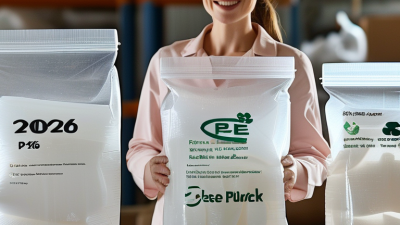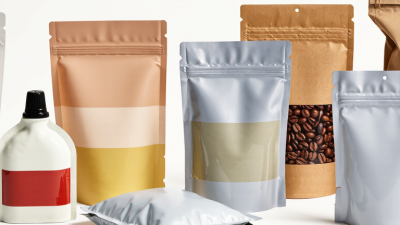
Let's be real—choosing Flat Bags for global sourcing in 2026 isn't just about comparing prices. You've got to dig into the material structure, how they actually perform on the line, whether the supplier's going to come through, and what the regional rules require. That sample might look great sitting on a table, but wait until it hits vibration, humidity, or just constant handling—it can fall apart fast. You know, it's really the little things that matter—like whether the zipper lines up just right, the gusset has the right shape, the seal is the right width, and the print actually lands where it's supposed to.
Alright, here's the thing—when experienced sourcing teams are looking at Flat Bags before committing to a big order, they don't just wing it. They go through materials like polyethylene, polypropylene, laminated films, paper-based stuff, and recyclable options. Each one has its own sweet spot depending on what you're packing and how your supply chain works. If you're dealing with food, cosmetics, or household goods, make sure you ask for up-to-date technical data and the right safety declarations. And don't just take the supplier's word for it—have the testing done by qualified labs. If you're looking for some extra assurance, independent inspection providers—like SGS or Intertek—can definitely help you verify things on the side.
When you're picking a supplier, you can't just go on promises—you need actual proof. Look at their factory capacity, quality records, photos from production, how samples have performed, and how they've handled corrective actions. Don't be shy about asking for batch consistency data either. You really want to know if they can keep the same dimensions when you order big volumes. And shipping matters more than you'd think. Flat packaging is great for space, but it means you've gotta be careful with carton protection. Also, make sure you get lead times, minimum order quantities, payment terms, and who's responsible for delivery all in writing. Trust me, future you will appreciate it.
Look, no guide is perfect — this one included.
Prices for materials can shift fast, especially heading into 2026. And sustainability claims? Sometimes they sound a lot more impressive than the evidence actually supports. So if you're buying smart, you really should push back on things like vague recycled-content percentages, compliance language that doesn't say much, or quotes that seem way too low. The sweet spot is weighing product protection, total landed cost, verified performance, and honest communication. Is that balance easy to find? Not always. But it's still the safest bet when you're sourcing globally and want to avoid nasty surprises.
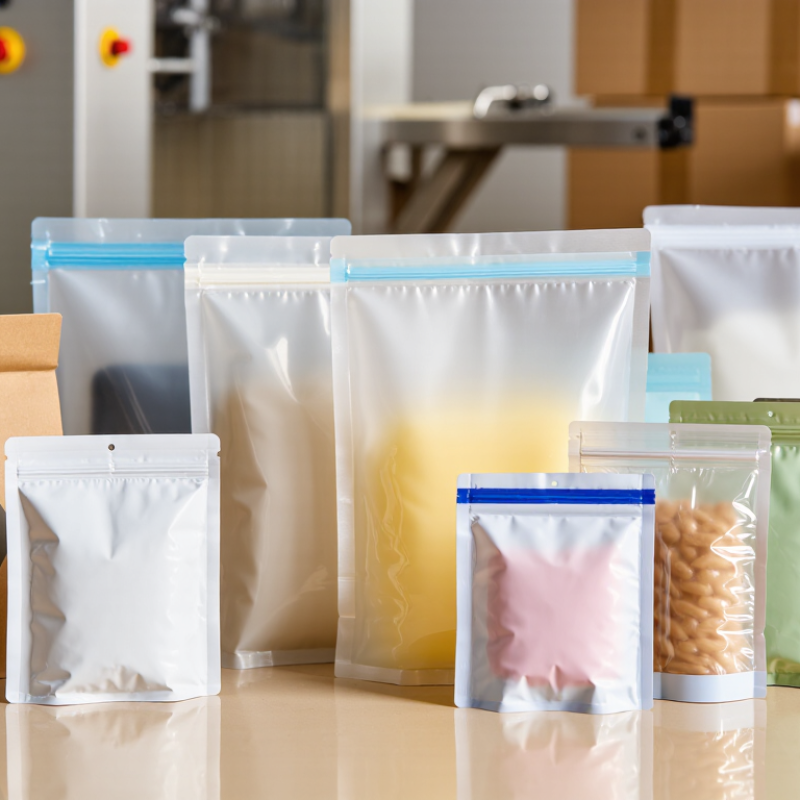
Global packaging demand keeps expanding. Smithers’ 2024 forecast places the market above US$1.2 trillion by 2028. Flat bags need sharper classification before quotation and sampling. ISO 21067-1 provides a useful vocabulary for packaging discussions. Use terms such as flexible packaging, bag, closure, seal, and laminate consistently. A flat bag normally has a simple profile, sealed edges, and no permanent gusset.
Classify structure by film construction and sealing method. Record whether the bag is monolayer, coated, or laminated. Specify side seals, bottom seals, tear notches, valves, and reclosure features. A 90-micron laminated bag behaves differently from a 90-micron single-film bag. That difference affects puncture resistance and recycling decisions. OECD projects global plastic waste could reach 1,014 million tonnes by 2060. Material reduction matters, but poor barrier design can increase product loss.
End use narrows the specification. Food applications may require oxygen and moisture barriers. Apparel bags usually prioritize clarity, light weight, and low noise. Industrial components need stronger seals and abrasion resistance. Ask for drop tests, seal-strength results, migration evidence, and production samples. In sourcing reviews, I prefer a one-page classification sheet. It exposes vague terms quickly. Still, no matrix captures every supply risk. Humidity, transit vibration, and operator handling can change performance. Recheck assumptions with real distribution trials.
When sourcing a Flat Pouch, define barrier targets before comparing suppliers or materials. For moisture-sensitive products, a WVTR target of ≤1 g/m²/day may be appropriate. Oxygen-sensitive products may also require a carefully defined OTR limit. Always state the test method, temperature, humidity, and film thickness. ASTM F1249 supports WVTR testing, while ASTM D3985 measures oxygen transmission. Results are meaningful only when conditions match your actual storage environment.
Tips: Request recent laboratory reports, not only supplier declarations. Check whether the report covers the complete pouch or just a film sample. Inspect seals, corners, and spouts, because small defects can defeat strong barrier layers. Ask for production samples and repeat testing after transport simulation. A pouch stored in a hot container may perform differently from one tested in a cool laboratory.
I once treated a low WVTR number as a complete purchasing decision. That shortcut looked efficient, yet it ignored seal quality and handling damage. A better review includes barrier data, seal strength, dimensional tolerance, and traceable batch records. Keep acceptance limits clear, but allow technical discussion when results sit near the threshold. Testing is not always perfectly repeatable. That is worth remembering. Select suppliers that explain deviations openly and can reproduce results across production batches.
When choosing flat bags for global sourcing in 2026, define seal performance before comparing prices. ASTM F88 helps measure the force required to separate a heat-sealed area. It shows whether the seal is consistently strong, weak, or uneven. Record jaw temperature, pressure, dwell time, film type, and seal width during testing. Small changes can alter results.
A strong seal can still leak. That lesson is easy to miss. ASTM F2338 uses a vacuum decay method to detect leaks without opening the package. It can reveal channels, pinholes, and damaged corners that visual inspection may miss. Ask the supplier to test samples after sealing, handling, and simulated transport. Wrinkles near the seal deserve special attention. They often create hidden leak paths.
Set acceptance limits with your quality team and sourcing partner. Do not accept a vague phrase such as “high seal strength.” Specify the test direction, sample size, conditioning time, and failure limit. Use ASTM F88 for seal strength evidence, then use ASTM F2338 for package leak screening. These methods answer different questions. Test results are not automatically proof of every market requirement. Materials, filling temperature, storage time, and shipping stress still matter. I would also repeat testing after production changes, even when the original data looked excellent. That extra check may feel inefficient, but it can expose process drift before shipment.
When choosing a Flat Bottom Bag for global sourcing in 2026, recyclability claims need more than a green symbol. ISO 18602 helps assess packaging optimization, including material reduction, functional performance, and recovery options. Ask suppliers for the bag’s material structure, barrier coating, ink type, and closure details. A lightweight bag is not automatically recyclable.
PCR claims require separate attention. EN 15343 focuses on recycled plastic traceability, recycled content calculation, and reliable communication through the supply chain. Request a controlled declaration showing the PCR percentage, input source, production batch, and chain-of-custody records. Check whether the claim refers to physical recycled content or a certified allocation method. The wording matters.
Look closely at evidence. A neat certificate can still leave questions. Compare test dates, product codes, and declared percentages. Confirm that the tested structure matches the bag being quoted, not an older sample. Regional collection systems also affect real-world recyclability, even when the material passes a technical assessment.
Be careful with absolute promises. “Fully recyclable everywhere” is rarely supportable. I would record open issues in the sourcing file, especially where local infrastructure is unclear. Supplier answers may be incomplete, and that is a reason to verify further, not to reject the project immediately. Clear specifications, traceable PCR data, and realistic end-of-life instructions create a more dependable purchasing decision.
| Flat Bag Structure | Typical Functional Use | Material Profile | Recyclability Considerations | PCR Claim Review | Evidence to Request from Supplier | Global Sourcing Risk | Practical Selection Guidance |
|---|---|---|---|---|---|---|---|
| Mono-PE film | Flexible packaging requiring moisture protection, sealability and high flexibility. | Polyethylene-based structure; commonly uses PE sealant layers and PE-compatible inks or coatings. |
Generally favorable Designed for PE film recycling where suitable collection and film-recycling infrastructure exists. Non-PE components, heavy coatings, labels, zippers and closures may affect compatibility. |
PCR content should be identified by polymer type and percentage. Post-consumer recycled PE may affect color, odor, seal performance and mechanical consistency. | Material specification; layer structure; PCR mass-balance calculation; batch or lot traceability; test results for seal strength, tensile properties and migration where relevant. | Collection and recycling access differs significantly between countries. A “recyclable” design claim does not prove that the bag is accepted in every local system. | Use when the end market has a suitable PE film pathway. Keep the structure as close to PE as the required barrier and performance allow. |
| Mono-PP film | Packaging needing higher heat resistance or stiffness than many PE-based structures provide. | Polypropylene-based structure; may include PP sealant and PP-compatible printing or coating systems. |
Conditionally favorable Recycling depends on the availability of PP flexible-packaging collection and sorting. PE additions, metallization and incompatible components can reduce compatibility. |
PCR PP should be separately identified from PCR PE. The claim should state whether the recycled content is post-consumer, pre-consumer or a mixture. | Polymer identification; recycled-content calculation; source and chain-of-custody records; declaration of additives, coatings and non-PP components. | Flexible PP recovery is less consistently available than rigid PP recovery in many markets. Confirm country-specific acceptance before making disposal claims. | Select for markets with a documented PP flexible-packaging route and where the required stiffness or heat performance cannot be met efficiently with PE. |
| PE or PP with EVOH barrier | Products requiring improved oxygen protection while retaining a predominantly polyolefin structure. | Polyolefin layers combined with a thin ethylene-vinyl alcohol barrier layer, usually separated by tie layers. |
Application-dependent The barrier percentage, tie layers, inks, adhesives and local design-for-recycling rules should be checked. A small barrier layer does not automatically make the whole bag recyclable. |
PCR may be used in selected polyolefin layers, but it can influence optical quality, odor, barrier performance and processing stability. The exact layer containing PCR must be documented. | Full layer breakdown by mass; barrier-layer percentage; design-for-recycling assessment; PCR allocation by layer; oxygen-transmission and seal-performance data. | Different recycling systems impose different limits on barrier materials and tie layers. Avoid a universal recyclability statement without a defined target market. | Use only when the product’s shelf-life requirement justifies the added barrier complexity. Verify acceptance with the intended recycling system. |
| Metallized PE or PP | Light and moderate oxygen or light protection where a metallic appearance or enhanced barrier is required. | Polyolefin film with a very thin deposited metal layer, commonly aluminum, or a metallized coating. |
Requires validation Metallization can affect sorting, reprocessing and recyclate quality. Recyclability must be evaluated for the complete structure rather than the base film alone. |
PCR in the polyolefin layer may be technically possible, but the metal layer and any primer or adhesive must be included in the material assessment. | Complete composition by mass; metallization details; recycling trial or compatibility evidence; barrier data; PCR documentation for the specific production lot. | High risk of inconsistent acceptance across countries and recycling operators. Marketing language should avoid implying universal recyclability. | Prefer non-metallized structures where the product specification allows. If metallization is essential, obtain documented market-specific validation. |
| PET/PE laminate | Flat bags requiring print quality, dimensional stability and a strong heat-seal layer. | Two different polymer families bonded together; PET commonly provides stiffness and print support, while PE provides sealability. |
Usually limited for film recycling The mixed-polymer construction is not equivalent to a mono-material PE or PP bag and may not be accepted in polyolefin film streams. |
PCR PET and PCR PE are separate claims and must not be combined into one unsupported “recycled content” statement. The percentage should be calculated on the total packaging mass. | Layer-by-layer mass percentages; adhesive information; recycled-content calculation; supplier declarations; end-of-life assessment for the destination market. | May be technically suitable but creates a higher risk of non-acceptance where flexible multilayer recycling is unavailable. | Choose only when performance needs cannot be met by a compatible mono-material structure, and communicate the end-of-life limitation clearly. |
| PET/AL/PE laminate | High barrier packaging for oxygen-, moisture- and light-sensitive products. | Multilayer construction combining PET, aluminum foil and PE sealant layers. |
Generally difficult to recycle mechanically The combination of different polymers, aluminum foil, inks and adhesives makes conventional flexible-film recycling challenging. |
PCR use must be verified separately for each layer. PCR in a food-contact layer may be subject to additional legal and functional restrictions. | Complete bill of materials; food-contact compliance where applicable; PCR source and allocation; barrier and shelf-life justification; end-of-life statement. | High risk for recyclability claims. Do not use “recyclable” solely because one component, such as PE, is recyclable by itself. | Reserve for products where the required shelf life cannot be achieved with a simpler structure. Perform an ISO 18602 optimization review. |
| Paper/PE laminate | Paper-like appearance, stiffness or print surface combined with heat sealing and moisture resistance. | Cellulosic paper layer combined with a PE coating or PE film; may include inks, adhesives and coatings. |
Depends on fiber recovery rules The PE proportion, coating weight, wet strength and local paper-recycling requirements determine whether fiber recovery is feasible. |
PCR fiber and PCR PE are different material streams. A paper claim does not demonstrate recycled plastic content, and vice versa. | Paper grammage; polymer percentage; coating and adhesive information; fiber-recovery test or assessment; PCR certificates and mass-balance records. | Incorrect disposal guidance can lead to contamination of paper streams. Country-specific instructions are essential. | Select only after confirming the target recycling route. Avoid excessive polymer coating when paper recovery is the intended pathway. |
| Compostable polymer film | Specific applications designed for industrial composting systems and compatible organic-waste collection. | May use certified compostable polymers such as PLA, PBAT blends or other materials defined by the applicable certification standard. |
Not a substitute for plastic recycling Compostability depends on the exact formulation, applicable standard, industrial conditions and availability of a suitable collection and treatment system. |
PCR plastic claims are generally not interchangeable with compostable-content claims. Verify whether recycled content is technically and legally permitted in the specified formulation. | Applicable compostability certificate; formulation and ink details; disintegration and biodegradation evidence; local infrastructure review; disposal wording. | High risk of contamination if placed in conventional plastic or home-composting streams without clear, market-specific instructions. | Choose only where an appropriate composting system is available and the packaging function supports this end-of-life route. |
Standards note: ISO 18602 addresses packaging optimization, including the relationship between packaging performance and resource reduction. EN 15343 addresses the traceability and assessment of recycled plastics and recycled content. Neither standard, by itself, guarantees that a specific flat bag is accepted by every recycling facility or establishes universal legal permission for a recycled-content claim.
Claim-control note: “PCR” means post-consumer recycled material. Suppliers should distinguish PCR from pre-consumer or post-industrial recycled material, state the calculation basis, identify the relevant polymer, and provide records that connect the claim to the specific packaging structure and production batch.
How to Choose Flat Bags for Global Sourcing in 2026?
When reviewing a Flat Bottom Pouch, compare at least three supplier quotes in one spreadsheet. Record MOQ, unit price, tooling, sample fees, and payment terms. A low unit price can hide a high minimum order. For example, 10,000 bags may suit a pilot launch, while 100,000 bags may create months of excess stock. Ask each supplier to quote the same size, film structure, zipper, print coverage, and packaging method.
Lead time needs careful checking. Separate sampling, production, and shipping days. One supplier may promise 18 production days but need 12 days for material preparation. Another may quote 30 days with materials already available. Request a written production schedule. Include inspection time and possible port delays. I have seen purchase plans fail because buyers counted only factory days. That mistake is easy to repeat.
Landed cost gives a more honest comparison. Add product cost, tooling, inland transport, freight, insurance, duties, customs handling, and delivery to your warehouse. Use the same destination for all three quotes. A supplier with a higher FOB price may still win after freight and duty differences. Check carton dimensions, too. Bulky cartons can raise freight costs sharply. Leave a small contingency for exchange-rate changes and rework. The cheapest quote may remain attractive, but only after every cost is visible.
How to Choose Flat Bags for Global Sourcing in 2026?
Choosing Pp Bags for global sourcing requires more than comparing unit prices. Start with a factory audit that checks ISO 9001 procedures, not just a framed certificate. Review incoming resin records, production instructions, calibration logs, and corrective-action reports. A reliable factory should explain what happens when a film roll shows uneven thickness. Ask for evidence.
BRCGS Packaging certification adds stronger controls for packaging hygiene, traceability, and risk management. During a site visit, inspect clean storage areas, sealed finished goods, pest-control records, and batch labels. Touch the film edges. Look for dust, wrinkles, pinholes, or weak seals. Small details can expose larger process problems. They matter.
Use AQL 1.5 sampling for a consistent shipment decision. Define critical, major, and minor defects before production begins. Inspect flat bags from different cartons, not only the first pallet. Measure length, width, thickness, seal strength, print position, and packing counts. Keep dated photographs and signed inspection records. AQL is useful, but it is not magic. It cannot replace process control or careful specification writing. I have seen acceptable samples hide poor carton loading, so the inspection plan should include transport protection. Leave room for review.
Factory audit focus: ISO 9001 quality management, BRCGS Packaging Materials product safety, and AQL 1.5 sampling.
Check controlled specifications, supplier evaluation, corrective actions, and traceable quality records.
Verify hygiene, hazard analysis, product safety controls, foreign-body prevention, and batch traceability.
The sample quantities follow single-sampling, normal inspection, General Level II examples under ANSI/ASQ Z1.4.
Use the lot-size range to estimate the inspection sample for flat bags. Confirm the applicable sampling plan, inspection level, and acceptance criteria in the purchase specification before production release.
A low price does not make a flat bag production-ready. In global sourcing projects, I check film structure, seal consistency, opening force, and lot traceability. UNCTAD’s Review of Maritime Transport 2024 states that over 80% of world trade moves by sea. That exposure makes packaging validation essential.
ISO 11607 validation should cover material compatibility, forming and sealing processes, seal strength, burst resistance, and package integrity. Test bags after conditioning, transport simulation, and accelerated aging.
A 2024 Smithers report on medical device packaging highlights continued demand for higher-performance sterile barrier systems. Still, a report cannot replace product-specific evidence. That is where suppliers sometimes overpromise.
Use a 1,000-bag pilot from the intended film, equipment, operators, and production site. Inspect seal width and visual defects throughout the run. Add dye penetration, peel testing, and distribution testing. Record every failed seal, not only the average result. One weak corner can matter more than 999 acceptable bags.
Approve production only when ISO 11607 evidence and pilot results agree. The 1,000-bag figure is useful, but it is not a universal guarantee. A poor sampling plan can make a large pilot misleading. Recheck results across shifts and, where possible, across lots. That extra work feels slow. It is cheaper than discovering damage after a long ocean transit.
Reinforced paper-plastic composite bags are becoming an efficient packaging solution for powder and granular materials across agricultural, food, and industrial supply chains. Recent market research highlights the growing demand for packaging that combines strength, moisture protection, printability, and transport efficiency. Designed for products such as flour, starch, animal feed, minerals, and permitted chemical materials, these bags use durable kraft paper laminated with PP woven fabric to provide reliable structural support during filling, stacking, and handling.
Manufactured in China, the bags can be supplied with an optional PE inner liner to improve resistance against moisture and help preserve product quality in demanding storage conditions. With load capacities ranging from 20kg to 40kg, they support secure transportation while helping optimize warehouse and logistics operations. Their reinforced construction reduces the risk of tearing, and the smooth outer surface allows clear, high-quality printing for product information, handling instructions, and customized packaging designs. As a factory-direct solution, they offer flexible specifications for manufacturers, distributors, and agricultural suppliers seeking durable packaging for powders and granules.
A flat bag has sealed edges and no permanent gusset. Its profile stays simple. It may use one film, coating, or several laminated layers.
Record film construction, seal position, closure type, and end use. Note side seals, bottom seals, tear notches, valves, and reclosure features. A classification sheet exposes vague specifications.
A 90-micron laminated bag may resist punctures better than a single-film bag. However, recycling decisions may become harder. Thickness alone tells little.
Use ASTM F88 to measure the force needed to separate a heat-sealed area. Record temperature, pressure, dwell time, seal width, and film type. Small settings matter.
Yes. A strong seal can still contain channels, pinholes, or damaged corners. ASTM F2338 uses vacuum decay to screen for leaks. Inspect wrinkles carefully.
Request production samples, seal-strength results, leak results, migration evidence, and simulated transport data. Test samples after handling and sealing. Visual inspection is not enough.
Ask for the complete material structure, barrier coating, ink type, and closure details. ISO 18602 supports packaging optimization reviews. A lighter bag is not automatically recyclable.
Request the declared percentage, material source, production batch, and chain-of-custody records. Check whether the claim uses physical content or an allocation method. Compare certificates with the quoted bag.
Humidity, vibration, filling temperature, storage time, and operator handling can change results. Repeat testing after production changes. I would not trust one perfect report.
Choosing the right Flat Bags for global sourcing in 2026 requires a structured, evidence-based process. Start by classifying bags according to construction, intended use, and ISO 21067-1 terminology. Define performance targets for moisture and oxygen transmission, such as a WVTR of no more than 1 g/m²/day, and specify testing under ASTM F1249 and ASTM D3985. Seal strength and package integrity should also be verified through ASTM F88 and ASTM F2338 methods.
Sustainability and supply reliability are equally important. Review recyclability and post-consumer recycled content claims against ISO 18602 and EN 15343, then compare minimum order quantities, lead times, and landed costs from at least three qualified suppliers. Factory audits should assess ISO 9001, BRCGS Packaging, and AQL 1.5 sampling practices. Before full production, complete ISO 11607 validation and confirm performance through a controlled 1,000-bag pilot.