Leave Your Message
A packaging bag isn’t just a simple container — it’s actually doing a lot more than it might seem at first glance. It’s there to protect your products, carry important info, and even make that first impression on a customer. When you see them in a warehouse, their real value really shows: sealed edges need to hold up during stacking, handles should resist pulling, and the material has to work seamlessly with filling equipment.
Honestly, there’s no one-size-fits-all ‘best’ packaging bag. For example, a stand-up pouch might be perfect for coffee, snacks, or powdered stuff. A paper bag can give off a natural, eco-friendly vibe for certain brands. Woven polypropylene bags are sturdy and great for heavier items like animal feed or garden supplies. And reusable fabric bags? They’re popular for retail shopping, but they need realistic plans for washing and durability to really work.
Tom Szaky, who started TerraCycle, once said, “The best packaging is no packaging.” That really makes you think, right? It challenges us to consider whether packaging is even necessary in some cases. But, of course, for products that need to stay hygienic, protected, or portioned out accurately, that idea isn’t always practical. So, instead of just asking, ‘What looks good?’, we should be asking, ‘Does this material actually suit what I need? Will it protect the product? Is it easy to ship? And does it avoid waste that could’ve been prevented?’
Details really do matter — a zipper might keep things fresh, but a weak seal? That could ruin a whole shipment. Glossy films might make products pop on shelves, but they can complicate recycling. On the flip side, paper might seem more eco-friendly, but often it needs extra layers to resist moisture, which complicates things too. Every choice involves trade-offs that deserve real honest thought.
In this guide, I’ll walk you through common types of packaging bags, their pros and cons, and some practical tips on what they’re best suited for. Keep in mind, after you actually test them with your products, things might look a little different. Nothing’s perfect right out of the box. Sampling, doing drop tests, filling trials, and talking to suppliers are all part of making the right call before settling on a final design.
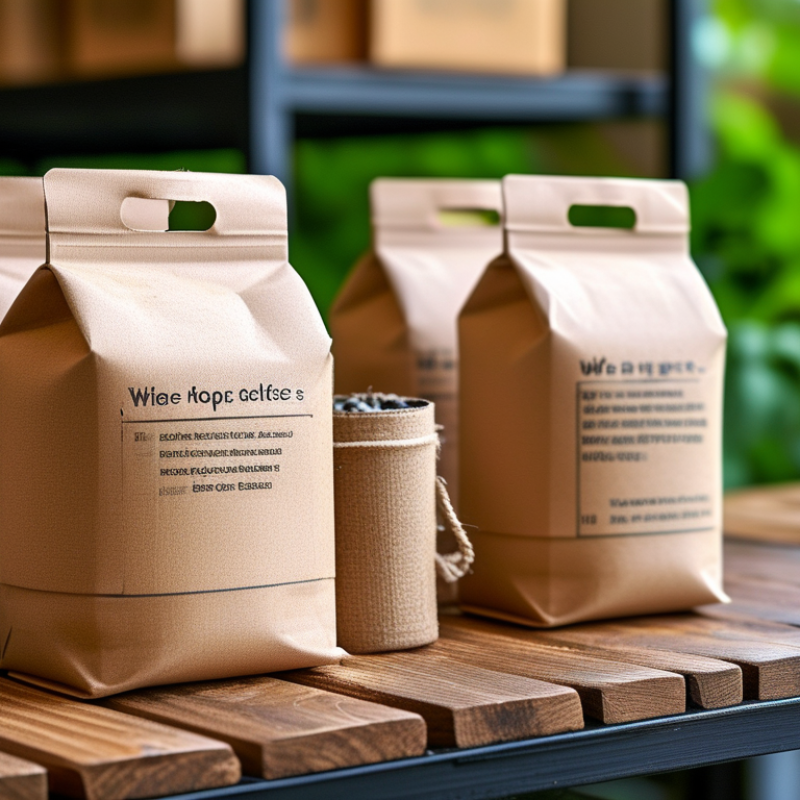
A packaging bag is a flexible container made from paper, plastic, woven fabric, or multilayer films. It protects goods from moisture, dust, light, pressure, and handling damage. The best choice depends on the product, filling method, storage period, and distribution route. A bag that works in a dry warehouse may fail during humid transport.
At the primary level, the bag touches the product directly. A food pouch may need a clean inner surface, strong seals, and a barrier against oxygen or vapor. For powder, a stable gusset and controlled opening can reduce spills. At the secondary level, bags may group smaller units inside an outer sack or carton. This layer improves counting and shelf movement. It also reduces direct handling. The design is not always elegant. It must be practical.
At the tertiary level, larger bags support palletizing, stacking, and warehouse transfer. Woven bags or reinforced bulk sacks often need strong seams, lifting loops, and tested load limits. At the quaternary level, packaging supports wider logistics systems, including containers, distribution centers, and repeated loading. Here, standard dimensions and traceable labels matter more than appearance. Some teams choose the thickest material and call it safer. That can waste resources and create disposal problems. A better assessment checks drop height, humidity, compression, filling speed, and reuse conditions before selecting the bag. Small tests often reveal weaknesses that specifications miss.
Its Role Across 4 Packaging Levels
| Packaging level | Main purpose | Common bag formats | Typical materials | Key protection provided | Best choice when... |
|---|---|---|---|---|---|
| Primary packaging | Directly contains the product and supports hygiene, freshness, portioning, and consumer use. | Stand-up pouch, flat pouch, sachet, gusseted bag, vacuum bag | Paper, polyethylene, polypropylene, polyester, aluminum foil, or multilayer laminates | Moisture, oxygen, light, odor, contamination, and tampering protection, depending on the structure | The product needs direct containment, a controlled shelf life, or convenient opening and resealing. |
| Secondary packaging | Groups one or more primary packages for display, handling, information, and additional protection. | Multipack bag, paper shopping bag, display pouch, inner liner, promotional bag | Paperboard, kraft paper, paper bags, polyethylene film, woven polypropylene, or reusable textiles | Grouping, light abrasion protection, carrying convenience, and product presentation | Several packaged units must be sold, carried, or displayed together. |
| Tertiary packaging | Combines secondary packages into stable transport units for warehouse and distribution operations. | Pallet cover, pallet liner, stretch hood, bulk bag, heavy-duty sack | Woven polypropylene, polyethylene film, kraft paper, corrugated materials, or laminated industrial fabrics | Load stability, dust and moisture resistance, stacking support, and handling efficiency | Products travel through warehouses, trucks, containers, or distribution centers in grouped loads. |
| Quaternary packaging | Supports large-scale logistics by organizing multiple transport units for long-distance or multimodal movement. | Container liner, large cargo liner, protective transport cover, bulk transport bag | Woven polypropylene, polyethylene, coated fabrics, reinforced textiles, or flexible composite structures | Bulk containment, contamination control, weather protection, and efficient use of transport space | Large volumes or multiple palletized loads require coordinated shipment across transport modes. |
| Bag type | Typical application | Strengths | Limitations | Relative material efficiency | Best suited for |
|---|---|---|---|---|---|
| Paper bag | Dry goods, retail carrying, bakery items, and secondary packaging | Printable, rigid enough for carrying, and commonly accepted in paper recycling systems when clean and dry | Lower moisture resistance and generally less durable than plastic or woven bags | Moderate; depends on paper weight, handles, coatings, and number of uses | Short-term carrying and dry products where moisture protection is not critical |
| Plastic film bag | Food, personal-care products, frozen goods, liners, and lightweight retail products | Lightweight, flexible, sealable, and capable of strong moisture protection | Recycling may be limited for flexible films; multilayer structures are difficult to separate | High; thin films can use relatively little material per packaged unit | Products requiring low weight, heat sealing, flexibility, or moisture barriers |
| Multilayer barrier pouch | Coffee, snacks, pet food, medical products, and oxygen- or light-sensitive goods | Excellent barrier performance, long shelf-life potential, and flexible space-efficient design | Different material layers can make mechanical recycling more difficult | High packaging efficiency, but end-of-life options depend strongly on the structure and local systems | Products where barrier performance and shelf-life preservation outweigh simple material separation |
| Woven polypropylene bag | Grain, animal feed, fertilizer, construction materials, and industrial bulk products | High tensile strength, tear resistance, and suitability for large loads | Usually needs an inner liner or coating for fine particles and high moisture protection | High for heavy-duty applications because the bag can carry substantial weight | Heavy products, bulk handling, and demanding transport conditions |
| Reusable textile bag | Repeated retail carrying, storage, produce transport, and organized reuse programs | Durable and potentially efficient over many uses | Uses more material initially and provides limited moisture or oxygen protection unless coated | Best when reused enough times to offset its higher initial material use | Repeated carrying where cleaning, storage, and consistent reuse are practical |
| Large flexible bulk bag | Powders, granules, minerals, chemicals, agricultural materials, and other dry bulk goods | High capacity, efficient lifting, and reduced need for many small containers | Requires suitable filling, lifting, storage, and discharge equipment; not ideal for every product | Very high for compatible bulk transport because one bag can replace numerous smaller units | Large-volume dry goods that can be safely handled as a single transport unit |
Consider product sensitivity, barrier needs, shelf life, filling speed, transport protection, and total cost. The cheapest option may fail.
Choose a structure with low water-vapor transmission. Test it under realistic humidity conditions. A dry warehouse test may not reflect coastal storage.
Use materials with strong oxygen protection and verified transmission results. Check the actual bag structure, not a similar sample.
Paper can provide a natural appearance, but it may need an inner barrier. Without that layer, moisture can soften the package. Looks can mislead.
No. A thick bag may seal poorly, increase waste, or slow filling. Seal quality matters more than thickness alone.
Inspect seal width, wrinkles, weak corners, and punctures. Testing should confirm seal strength, microbial protection, and aging performance. Small defects matter.
No. Tests may miss overfilling, rough pallet movement, or sharp contact during handling. Pilot trials should copy the real distribution route. Perfect simulation is unlikely.
Confirm the material suits the food type, temperature, contact time, and reuse conditions. Supplier documents should match the complete bag structure. Do not rely on similar materials.
Include product loss, filling speed, freight, storage damage, and disposal requirements. A low purchase price can hide expensive failures. Some assumptions need revision after pilot testing.
A Packaging Bag is more than a simple container: it protects products, supports handling, and helps maintain quality through primary, secondary, tertiary, and transport packaging levels. This article explains how PE, PP, PET, PA, and foil are combined into common multilayer structures to balance strength, flexibility, sealing performance, moisture resistance, and oxygen protection. It also compares pouches, sacks, FIBC bags, and vacuum bags according to product type, filling method, and load requirements. While retail pouches are designed for convenient consumer use, FIBC bags can support safe working loads of approximately 500–2,000 kg when properly specified.
The guide further examines high-barrier performance, including oxygen transmission rates below 1 and water vapor transmission rates below 1 for suitable films. It highlights key safety considerations such as ISO 11607, FDA food-contact requirements, and UN 6.1 testing where applicable. Ultimately, the best bag depends on six factors: product characteristics, required shelf life, protection level, load and logistics needs, compliance requirements, and total cost.