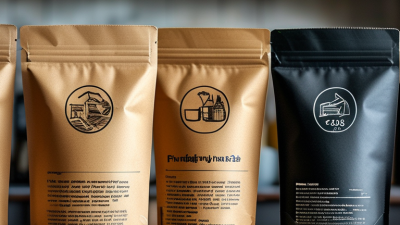
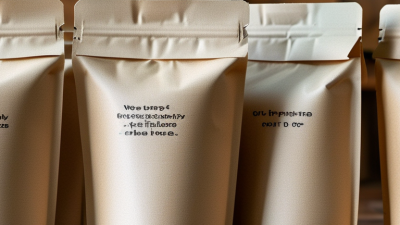
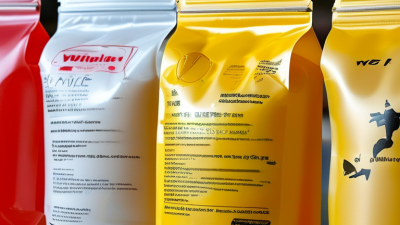
When you're picking the right Flat Bottom Bag, it's way more practical to look beyond the price tag. The bag has to do a lot: protect what's inside, work with your filling line, and make your brand look credible. A coffee roaster might need a high-barrier laminate, a strong zipper, and a one-way valve. A pet food producer? They may care more about puncture resistance and wider gussets. Every choice ripples through storage, shipping, and how customers experience the product.
As Packaging World editor Anne Marie Mohan put it, 'Effective packaging must protect the product and perform reliably.' That pretty much sums up this buying decision. So look closely at the bag's dimensions, bottom stability, seal strength, material structure, and print quality. Put a filled sample on a retail shelf. Does it lean? Wrinkle? Lose its shape? Those little details matter more than they seem.
A reliable supplier should explain material options clearly and let you test samples before production. Ask about moisture resistance, oxygen protection, filling speed, minimum order quantities, and quality inspections. Get evidence from similar applications—not just pretty photos. A low price can look smart at first. It may not be.
In real sourcing work, buyers sometimes get too hung up on appearance. I've seen beautiful bags fail because their seals opened during transportation. That mistake is avoidable, but not every test predicts real conditions. Humidity, vibration, stacking pressure, and repeated handling can expose weaknesses. So test before you scale. The ten tips below should help you compare Flat Bottom Bag suppliers with more confidence, question the convenient assumptions, and choose a structure that supports both product safety and long-term brand value.
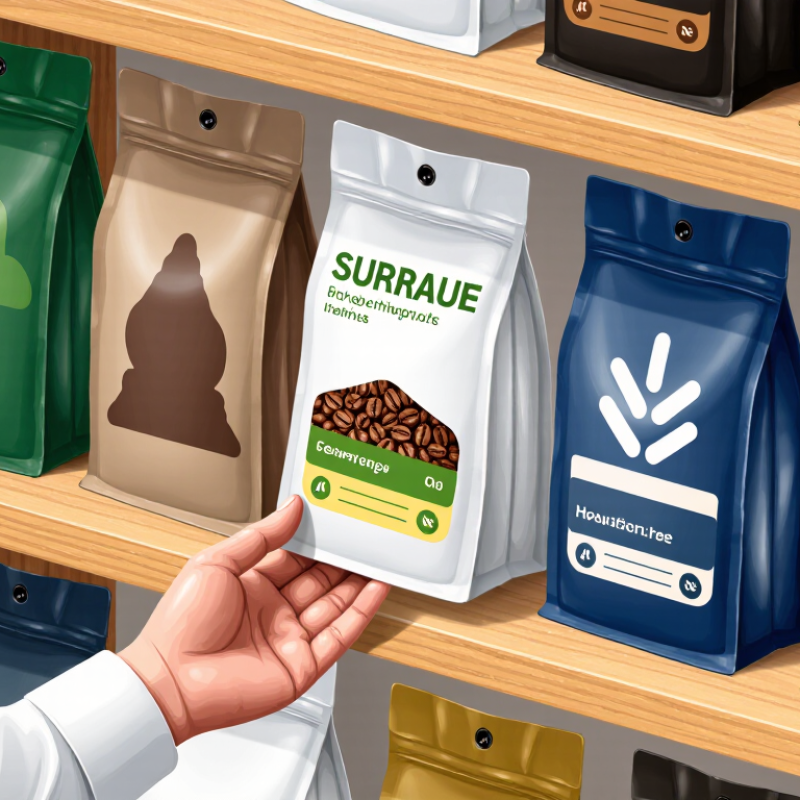
Define the Product Needs and Intended Use
Before choosing a Flat Bottom Pouch, define the product’s real demands. Is it powder, granules, liquid, or oily food? Each material behaves differently during filling, storage, and transport. A fine powder may escape through a weak seal. A sharp granule can puncture thin film. In packaging trials, I have seen attractive pouches fail because the product was tested only on a clean table, not after vibration and stacking.
Temperature matters. Note the filling temperature, sterilization needs, and expected storage conditions. For moisture-sensitive products, request water vapor transmission data. For oxygen-sensitive contents, check oxygen transmission rates. The Flexible Packaging Association reported that flexible packaging represents roughly one-fifth of U.S. packaging sales, showing its broad commercial use. However, broad use does not mean one structure fits every product.
Intended use should guide the opening and closing design. A pouch for daily kitchen use may need a zipper, wide opening, and stable base. A single-use product may need easy tearing instead. Smithers projects the global flexible packaging market will exceed 300 billion dollars by 2028, increasing pressure for practical and material-efficient formats. Still, sustainability claims require caution. I once focused too heavily on lightweight film and overlooked poor shelf stability. That was a costly design lesson. Ask for migration, seal-strength, drop, compression, and shelf-life tests before approving production. Small details matter.
Choose the Right Bag Size and Capacity
Choosing the right size for Flat Bags begins with the product, not the shelf. Measure the product’s length, width, and height before selecting a bag. Remember the gusset. It changes usable capacity.
In packaging trials, I leave about 10–15% headspace above the filling line. This space helps prevent bulging and supports cleaner sealing. A 500-gram bag of dense grains may need less volume than a 500-gram bag of lightweight flakes. Weight alone can mislead. Product density matters.
Test the filled bag by placing it upright, flat, and inside its shipping carton. Check whether the contents settle evenly without stressing the seams. A bag that looks spacious in a sample can become tight after vibration during transport. I once selected a size based only on product weight. The seal later felt crowded. That mistake changed my testing process.
Consider how customers will handle the bag. A wide opening may suit scooping, while a compact profile can save shelf space. Do not ignore storage conditions, either. Humidity, product movement, and repeated opening can affect practical capacity. Ask for filled samples, not empty ones. Empty bags often look larger than they perform.
10 Tips for Buying the Right Flat Bottom Bag - Choose the Right Bag Size and Capacity
| Tip |
Recommended Bag Size
(W × D × H) |
Approx. Capacity |
Typical Dry Fill Range |
Suitable Applications |
Buying Guidance |
| 1 |
10 × 5 × 18 cm |
Approximately 0.8–1.0 L |
150–300 g |
Spices, tea, small snacks, sample packs |
Choose this compact size when portability and low product volume are the main priorities. |
| 2 |
12 × 6 × 20 cm |
Approximately 1.3–1.5 L |
250–450 g |
Coffee, granola, dried fruit, confectionery |
A practical choice for small retail portions while leaving room for sealing. |
| 3 |
14 × 7 × 22 cm |
Approximately 1.9–2.2 L |
400–700 g |
Coffee beans, rice, pasta, pet treats |
Select a medium gusset when the package must stand securely on a shelf. |
| 4 |
16 × 8 × 24 cm |
Approximately 2.7–3.0 L |
600–1,000 g |
One-kilogram dry food portions, snacks, baking ingredients |
Allow at least 10% free space above the product for a clean and reliable closure. |
| 5 |
18 × 10 × 28 cm |
Approximately 4.3–4.8 L |
1.0–1.8 kg |
Large coffee packs, cereal, flour, dried legumes |
Use a wider bottom when the product is bulky or needs extra stability during storage. |
| 6 |
22 × 10 × 30 cm |
Approximately 5.5–6.2 L |
1.5–2.5 kg |
Rice, pet food, large snack portions, household powders |
Check the filled bag weight and lifting requirements before selecting a high-capacity format. |
| 7 |
26 × 12 × 35 cm |
Approximately 9.0–10.0 L |
2.5–4.0 kg |
Bulk dry goods, animal feed, large-format pantry products |
Confirm that the shelf, carton, and filling equipment can accommodate the larger dimensions. |
| 8 |
Any selected size |
Based on product density |
Varies by material |
Coffee, flour, rice, nuts, powders, and irregular pieces |
Test the actual product because equal volumes can have different weights and filling behavior. |
| 9 |
Add 1–2 cm to required height |
Preserves usable capacity |
Depends on closure type |
Bags with zippers, heat seals, or tear notches |
Account for the seal area, zipper position, and headspace so the finished bag is not overfilled. |
| 10 |
Measure the filled product |
Use actual product volume |
Verify before ordering |
New products, seasonal items, and custom portion sizes |
Fill a sample bag, check its standing profile, closure space, and transport fit before placing a large order. |
Capacity note: Capacity figures are approximate geometric estimates based on the listed bag dimensions. Actual usable capacity varies with gusset construction, material thickness, product density, particle size, and the amount of headspace required for sealing.
Compare Materials, Strength, and Product Protection
10 Tips for Buying the Right Flat Bottom Bag
Compare Materials, Strength, and Product Protection
A flat bottom bag must match the product, not just the shelf design. The Flexible Packaging Association reported roughly 40 billion dollars in U.S. industry sales in 2023, showing how widely these structures are used.
Tip 1: Check product weight.
Tip 2: Examine sharp edges, oil, moisture, and oxygen sensitivity.
Tip 3: Compare polyethylene, polypropylene, paper laminates, foil, and barrier films.
Polyethylene often provides flexible sealing. Foil improves light and oxygen protection. Paper looks natural, but it may need an inner layer. Materials can disappoint when conditions change.
Tip 4: Ask for tensile, tear, and seal-strength results.
Tip 5: Request drop and vibration testing based on ISTA procedures.
Tip 6: Inspect the bottom gusset and corner seals.
These areas receive stress during filling, stacking, and transport.
Tip 7: Compare barrier values, including oxygen transmission rate and water vapor transmission rate. Lower values usually mean stronger protection. However, the right number depends on the product. More barrier is not automatically better.
Tip 8: Test the bag with real filling equipment.
Tip 9: Review batch consistency and sample records.
ASTM D4169 and ISTA testing can reveal weaknesses, but laboratory results cannot replace field experience. I once trusted a thick film too quickly; its seal failed after repeated handling.
Tip 10: Calculate total cost, including damaged goods, rejected bags, and storage space.
A cheaper bag may become an expensive mistake. Ask for independent test reports, but question unclear data. Reliability deserves evidence.
Evaluate Bottom Design, Stability, and Filling Performance
10 Tips for Buying the Right Flat Bottom Bag
Evaluate Bottom Design, Stability, and Filling Performance
A flat bottom bag should stand securely before it is filled. Check the base width, gusset depth, and corner seals. A wider base usually improves balance, but excessive depth can waste shelf space. Place an empty Flat Pouch on a smooth table and gently tap its side. It should recover without folding sharply.
Inspect the bottom seam closely. Uneven stitching, thin film, or wrinkled corners may create weak points under load. Fill a sample with the intended product, then watch how it settles. Powder may spread unevenly, while granules can press against one corner. The bag must remain upright during handling. Small tests reveal problems.
Filling performance depends on the opening, material stiffness, and machine settings. Ask whether the pouch opens consistently under suction or mechanical gripping. A stable mouth can reduce spills around the filling nozzle. I once approved a pouch with an attractive base, but its soft sidewalls collapsed during faster filling. That decision needed more testing. Do not judge stability at one speed only. Run samples at low, normal, and higher operating speeds. Check seal cleanliness afterward. Product dust near the seal can reduce closure reliability. Also compare filled bags after stacking overnight. Their bases may change shape under pressure. A practical trial is more trustworthy than a specification sheet alone.
10 Tips for Buying the Right Flat Bottom Bag
Evaluate bottom design, stability, and filling performance before selecting a flat bottom bag.
The chart uses a 0–100 evaluation scale. Importance indicates how strongly each factor affects purchase decisions, while target performance represents a practical benchmark for a well-specified bag. Prioritize bottom construction, upright stability, opening accuracy, seal integrity, and filling consistency when comparing samples.
Check Closures, Handles, and Custom Features
Buying the right Bottom Bag starts with its closure. A zipper should open smoothly and reseal without crushing the top edge. Test it with the actual filling, not an empty sample. For powders, a heat seal can improve tamper evidence and reduce leakage. The Flexible Packaging Association’s 2023 industry report valued the U.S. flexible packaging market at about 39 billion dollars in 2022. That scale reflects strong demand, but it also exposes inconsistent sealing as a common quality risk. Ask for seal-strength testing and drop-test results.
Handles need practical attention. A full bag can pull sharply at the top seam, especially during warehouse movement. Choose reinforced handles with rounded edges and enough clearance for gloved hands. The handle should not fold into the closure area. It sounds minor. It is not. Packaging Machinery Manufacturers Institute research has reported that ease of opening and resealing strongly affects consumer packaging preferences. I would test ten filled units, not one perfect sample.
Custom features can improve performance, but unnecessary additions increase cost and failure points. Consider tear notches, transparent windows, printing panels, and one-way valves only when the product needs them. A custom Bottom Bag should match its filling weight, moisture sensitivity, storage time, and transport conditions. Request dimensional drawings before production. Check the bottom gusset after filling; it should stand flat without twisting. I once overlooked this detail in a sample review, and the bag looked stable until stacked. That was a useful mistake. Ask for independent material and migration documentation, plus a written inspection standard.
Review Suppliers, Pricing, Quality, and Delivery Terms
Buying the right flat bottom bag starts with supplier evidence, not attractive photos. The Flexible Packaging Association reported approximately $39.5 billion in U.S. flexible packaging sales in 2022. That scale creates many choices, but quality still varies. Tip 1: Check factory experience with your bag structure. Tip 2: Request recent test reports. Tip 3: Verify material thickness, seal strength, and print tolerance. A polished sample can hide weak seams. I have seen this happen.
Pricing deserves careful comparison. Tip 4: Ask for a complete quotation, including plates, cylinders, sampling, packing, and inland freight. Tip 5: Compare prices by finished bag, not only material weight. Tip 6: Confirm minimum order quantities and payment stages. Tip 7: Request a written validity period for the quotation. Resin prices can change quickly. Smithers’ flexible packaging market analysis identifies material costs and sustainability pressures as major industry concerns. The cheapest offer may become expensive after rework.
Delivery terms should be measurable. Tip 8: Confirm production time after artwork approval, not after the first inquiry. Tip 9: Set inspection points before shipment. Tip 10: Define remedies for shortages, late delivery, or failed seals. Ask for batch photographs, carton counts, and tracking documents. Also check whether the supplier can repeat the same dimensions next quarter. That detail matters. My own mistake was trusting an estimated date without defining what “ready” meant. A clear contract would have prevented the delay.
China Food-Grade Woven Packaging Bags: Safe Storage for Rice, Flour, and Agricultural Products
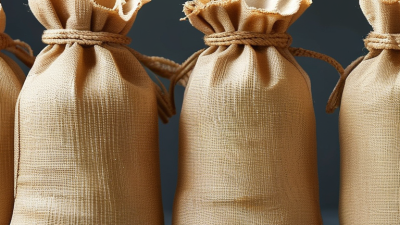
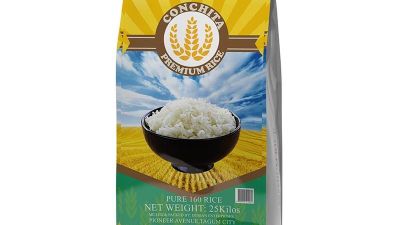
China food-grade woven packaging bags provide a dependable solution for storing and transporting rice, wheat, flour, sugar, animal feed, and other agricultural products. Produced with food-grade polypropylene, these woven bags offer strong tensile performance and reliable load capacity for demanding handling conditions. Their durable construction helps protect contents during filling, stacking, warehouse storage, and distribution.
An OPP laminated outer surface improves moisture resistance and supports clear, high-quality printing, while the PE inner liner creates an additional hygienic barrier against dust, humidity, and external contamination. This multilayer structure is suitable for food processors, agricultural suppliers, wholesalers, and bulk distributors seeking safer and more efficient packaging. The bags can be supplied in practical capacities from 20kg to 40kg, with customized dimensions, colors, printing, and structural designs available for different products and filling requirements.
Designed for both performance and convenience, these woven packaging bags help maintain product quality throughout the supply chain. Their lightweight construction supports easier handling without sacrificing strength, and their flexible design allows efficient stacking and transportation. From daily rice packaging to large-scale flour and feed distribution, they offer a professional, hygienic, and cost-effective option for modern agricultural packaging needs.
FAQS
Identify the product form, weight, oil content, moisture sensitivity, and oxygen sensitivity. Powder, granules, and liquids behave differently. Test the actual product.
Record filling temperature, sterilization needs, transport conditions, and storage temperatures. Request water vapor and oxygen transmission data when protection matters. Conditions change.
Polyethylene supports flexible sealing. Foil improves light and oxygen protection. Paper may need an inner barrier layer. More barrier is not always better.
Request tensile, tear, and seal-strength results. Include drop, vibration, compression, and stacking tests. Inspect samples after repeated handling.
Check base width, gusset depth, and corner seals. A wider base often improves balance. Excessive depth may waste shelf space.
Place an empty pouch on a smooth table. Tap the side gently. It should recover without folding sharply. Then fill it with the intended product.
Test samples on the real filling equipment. Check opening consistency, sidewall stiffness, filling speed, and seal cleanliness. Run low, normal, and higher speeds.
Vibration, stacking, dust, and repeated handling expose hidden weaknesses. I once trusted a thick film too quickly. Its seal failed later.
Include pouch prices, damaged goods, rejected units, storage space, and machine delays. A cheaper pouch can become expensive. Evidence matters more than promises.
Conclusion
Buying the right Flat Bottom Bag starts with clearly defining the product, application, filling method, storage conditions, and protection requirements. Consider the ideal size and capacity to ensure efficient packing without unnecessary material or wasted space. Compare available materials by strength, durability, moisture resistance, and suitability for the product being packed. The bag’s bottom design is also important, as a stable base can improve storage, stacking, transport, and filling performance.
Before making a decision, review the closure options, handles, openings, and other custom features that may improve convenience and usability. It is equally important to assess potential suppliers carefully by comparing pricing, production quality, communication, minimum order quantities, and delivery terms. Request samples or technical details when possible, and confirm that the finished bags meet your functional expectations. A thoughtful evaluation of these factors will help you select a Flat Bottom Bag that balances performance, appearance, cost, and long-term reliability.