These days, buyers all over the world are rethinking the whole journey a product takes—how it travels, opens, and stays protected along the way. That’s where a Seal Packaging Pouch comes in. It’s got to stand up to pressure, moisture, oxygen, heat, and all that repeated handling. And it still needs to make filling easy and sealing dependable.
Grand View Research put the global flexible packaging market at around US$201.38 billion back in 2023. And according to its report, that growth is expected to keep going from 2024 through 2030. Smithers points to flexible packaging as a big growth area too, all the way out to 2028 — mostly thanks to convenience, lightweighting, and the rise of e-commerce distribution. So yeah, the numbers definitely suggest some real momentum. That said, they don't guarantee how a product will actually perform.
Alison Keane, who’s the President and CEO of the Flexible Packaging Association, has called flexible packaging “the most resource-efficient packaging format available today.” And honestly? She’s got a point. A pouch often uses less material than a lot of rigid options out there. But—and this is important—material efficiency by itself isn’t enough. You still have to look closely at things like seal strength, barrier performance, zipper quality, and how well it works with filling equipment. Those all need careful testing. So, this guide walks you through ten of the main Seal Packaging Pouch types that international buyers tend to come across — everything from stand-up pouches to flat sachets and spouted formats. Each one fits a different product and supply-chain situation. Take coffee: the pouch probably needs to lock in aroma. Sauces? You want clean, easy dispensing. Dry foods? Then a stable base and clear labeling really help. Honestly, it's the small details that make the difference.
Honestly, the selection process isn't perfect. And yeah, buyers sometimes compare price before they actually test seal integrity. That can lead to losses you could've avoided. A better call? Weigh product sensitivity, transport distance, equipment limits, storage climate, and what end users really expect. The overview below offers some practical direction, though you'll still want to verify things with suppliers and run a few real-world trials.
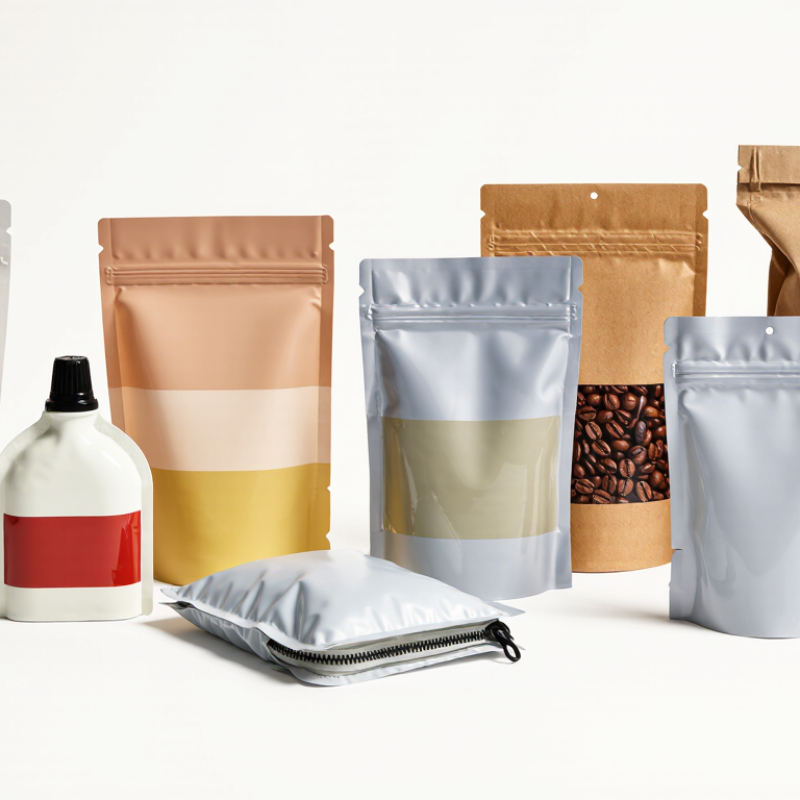
Seal pouches are built around three decisions: material layers, seal design, and product protection. A typical structure may combine printed film, barrier film, and a heat-sealable inner layer. Each layer has a job. The outer film carries graphics and resists scuffing. The middle layer limits oxygen, moisture, or light. The inner layer contacts the product and forms the seal.
Common pouch formats include stand-up, flat, side-gusseted, spouted, retort, vacuum, and child-resistant designs. The right format depends on filling equipment, product weight, storage conditions, and opening habits. Heat seals are widely used, but seal width and temperature need careful control. A narrow seal can fail during transport. Excessive heat can distort the film.
Buyer checks should include pouch dimensions, film thickness, seal strength, leak performance, and barrier data. Ask for oxygen transmission rate and water vapor transmission rate when freshness matters. Request samples from the actual production line. A sample made in a laboratory may not behave the same way. Test filled pouches with compression, drop, and aging checks. I also inspect seal edges under bright light, where small wrinkles become visible.
No pouch is perfect. A stronger barrier may reduce recyclability or increase cost. A glossy surface may look attractive but show scratches quickly. These trade-offs deserve written specifications, not casual promises. Sometimes, buyers focus on unit price and overlook filling speed, rejected packs, or damaged cartons. That decision can become expensive. Reliable sourcing depends on measured results, clear tolerances, and honest review of failures.
Top 10 Types of Seal Packaging Pouches for Global Buyers
Global buyers compare pouch structure, seal strength, and barrier performance together. The ten common formats include stand-up, flat, side-gusset, quad-seal, spouted, retort, vacuum, zipper, sachet, and stick pouches. Each format supports different filling lines and product shapes. A stand-up pouch may need strong corner seals. A vacuum pouch needs reliable film flexibility. These details influence oxygen and moisture protection.
OTR measures oxygen transmission, while WVTR measures water vapor transmission. ASTM D3985 commonly reports OTR in cc/(m²·day), under defined temperature and humidity conditions. ASTM F1249 commonly reports WVTR in g/(m²·day). Test conditions matter greatly. OTR may be tested near 23°C and controlled humidity. WVTR often uses 38°C and 90% relative humidity. Buyers should request the exact report, not only a single barrier number.
A low number is not automatically better. It may reflect a thicker film, different humidity, or laboratory conditioning. In my early packaging reviews, I compared values without checking test temperature. That caused an unreliable material decision. Ask for film thickness, seal temperature, test area, and conditioning time. For dry powders, moisture control may dominate. For oxygen-sensitive foods, OTR may deserve priority. Multilayer films can improve both barriers, but recycling decisions become more complicated. Pouch samples should also undergo drop, seal, and storage testing before purchase.
Global buyers often compare pouch structure before discussing price. Flat pouches are the simplest option, with sealed edges and a practical open end. They suit lightweight products, sample packs, and compact retail items. Plastic Seal Bags in this format usually save material and shipping space. However, their appearance can feel basic when shelf presentation matters.
Three-side-seal pouches close along the bottom and both sides. The remaining top edge supports filling and final sealing. This design offers a wider front panel for product information and clear labeling. I have seen small changes in pouch width affect filling speed and corner wrinkles. Four-side-seal pouches use seals on all four edges. They look more structured and can stand flatter during display. Their clean edges may improve perceived quality, but they often require tighter production control and careful dimension matching.
Tips: Check seal strength after transport simulation. Test corners, not only the center. Ask for samples with your actual filling process. A pouch may look excellent but perform poorly under heat, pressure, or vibration. I once underestimated zipper alignment; the final samples revealed uneven opening resistance. That mistake was useful, but avoidable. Choose barrier layers according to moisture, oxygen, light, and product sensitivity.
Stand-up pouches use a gusseted base that keeps products upright on shelves. Their large printable surface supports clear instructions and strong visual merchandising. According to Smithers’ report, The Future of Global Flexible Packaging to 2028, flexible packaging demand is expected to grow steadily through 2028. Stand-up formats benefit from this shift because they use less material than many rigid containers.
Spouted pouches suit sauces, beverages, detergents, and other pourable products. A wide opening improves filling speed, while a controlled spout reduces mess during use. Retort pouches need heat-resistant laminates, reliable seals, and validated thermal processing. The European Retort Pouch Market report by Mordor Intelligence identifies shelf-stable food as a major demand area. Small sealing defects can still become serious safety risks. Testing matters more than attractive artwork.
Vacuum pouches remove air before sealing, helping reduce oxidation and package volume. They are common for meat, seafood, cheese, and selected industrial goods. The Flexible Packaging Association reports that food remains a major application for flexible packaging in the United States. Buyers should check puncture resistance, oxygen transmission, seal strength, and storage temperature. Form Fill Seal Woven Sack is a related search term, but it serves bulk dry goods rather than most vacuum applications. The wrong structure can look economical and fail during transport. That lesson is easy to overlook.
Comparative specification guide for international sourcing and packaging evaluation
| Type | Typical Construction | Common Product Applications | Typical Filling Range | Barrier Profile | Sealing and Closure Options | Key Advantages | Important Buying Considerations |
|---|---|---|---|---|---|---|---|
| Type 4 Stand-Up Pouches |
Usually a flexible multilayer film with a bottom gusset that allows the pouch to stand on shelves. Common structures include PE-based sealant layers combined with PET, BOPP, nylon, EVOH, or metallized film, depending on the product. | Snacks, dry foods, pet treats, frozen foods, detergents, personal-care products, powders, and household products. | Approximately 100 g–2 kg, depending on pouch dimensions, product density, and gusset design. | Low to high barrier options are available. Metallized or EVOH-containing structures can improve protection from oxygen, moisture, light, and aroma loss. | Heat-sealed top or side seams; optional press-to-close zipper, slider zipper, hook-and-loop closure, tear notch, or laser score. | Efficient shelf presentation, large printable surface, convenient opening, and generally lower packaging volume than rigid containers. | Confirm gusset stability, seal strength, zipper performance, drop resistance, filling speed, and compatibility with the intended recycling system. |
| Type 5 Spouted Pouches |
Flexible multilayer pouch fitted with a rigid or semi-rigid plastic spout. The spout may be positioned at the top corner, top center, or bottom corner according to dispensing requirements. | Juices, sauces, baby food, yogurt, liquid soap, shampoo, cleaning concentrates, sports nutrition, and agricultural liquids. | Approximately 90 ml–2 L for common consumer formats; larger industrial formats are also possible with reinforced construction. | Barrier depends on the film and spout assembly. High-barrier laminates can protect oxygen-sensitive liquids, while opaque layers can reduce light exposure. | Heat-sealed pouch seams with screw cap, flip-top cap, tamper-evident closure, or fitment. Some designs include a foil membrane under the cap. | Controlled dispensing, resealability, reduced product residue, lightweight logistics, and convenient use for liquids and semi-liquids. | Evaluate spout opening size, cap torque, leak testing, fitment attachment strength, tamper evidence, filling accuracy, and compatibility with automated equipment. |
| Type 6 Retort Pouches |
Heat-resistant multilayer laminate designed for thermal processing after filling and sealing. Common layers may include polyester for strength, aluminum foil or a transparent high-barrier layer, and a food-contact polyolefin sealant. | Ready meals, sauces, soups, rice, seafood, meat products, pet food, and shelf-stable wet foods. | Approximately 100 g–1.5 kg for many retail formats; dimensions and fill weight must be matched to the thermal process and product viscosity. | Very high oxygen and moisture barrier can be achieved with foil laminates. Clear high-barrier structures are available when product visibility is required. | High-strength heat seals; optional easy-open notch. Closures and zippers must be specifically rated for the selected retort process. | Suitable for commercial sterilization, lower shipping weight than cans or jars, efficient storage, and convenient flat or semi-flat packing. | Validate the complete pouch structure for the required time-temperature process, pressure, seal integrity, delamination resistance, puncture resistance, and food-contact compliance. |
| Type 7 Vacuum Pouches |
Flexible pouch made from puncture-resistant films that can conform closely to the product after air removal. Typical structures use PA/PE or other multilayer combinations with a reliable heat-seal layer. | Fresh meat, poultry, seafood, cheese, processed foods, coffee, medical products, and industrial components requiring reduced air exposure. | Approximately 100 g–5 kg for common food applications; heavier formats require reinforced film and stronger seals. | Medium to high oxygen barrier is available. Barrier selection should reflect the product’s oxygen sensitivity, storage temperature, and intended shelf life. | Heat-sealed open end, often used with chamber vacuum or external suction equipment. Optional bone guard, tear notch, rounded corners, or anti-slip surface. | Reduces air around the product, helps limit oxidation and freezer burn, improves product presentation, and supports compact storage. | Check puncture and abrasion resistance, vacuum retention, seal contamination tolerance, film shrink behavior, bone protection, and compatibility with the vacuum machine. |
Stick, sachet, and quad-seal pouches serve different packing and handling needs. Stick pouches are narrow, lightweight, and easy to tear. They suit powdered drinks, seasonings, and single-use products. Their slim shape reduces storage space, but filling accuracy can become difficult with dusty materials. A practical trial is essential.
Sachet pouches offer a compact format for small portions. They work well for powders, liquids, and granules when the seal structure matches the product. Operators should check seal width, tear direction, and leakage resistance. Small sachets can run quickly on filling lines. However, poor alignment may create weak edges.
Quad-seal pouches provide a stable base and four strong sealed corners. They stand neatly on shelves and offer useful front and side panels. This design supports larger volumes and premium presentation. Yet, the extra sealing points may increase material use and machine setup time.
Tips: Request samples before approving Pouch Packaging. Test them with real filling temperatures, vibration, and storage conditions. Inspect seals after opening and after transport simulation. Do not rely only on attractive artwork. I have seen good-looking pouches fail during repeated handling. That was a useful reminder. Choose barrier layers according to moisture, oxygen, light, and product sensitivity. Review the pouch shape with your filling equipment supplier. A small adjustment can prevent expensive production delays.
For global buyers comparing seal packaging pouches, ASTM F88/F88M offers a practical way to assess seal strength. The method measures the force needed to separate a sealed pouch, commonly reported in N/15 mm. It applies to flat pouches, stand-up pouches, spouted formats, and Foil Pouch Packaging.
A laboratory cuts sealed specimens into consistent strips, often 15 mm wide. The tester then pulls the seal at a controlled speed. Results reveal whether the seal peels cleanly, stretches, tears, or separates unevenly. These details matter during filling, transport, and opening.
A higher value does not automatically mean better performance. A very strong seal may be difficult for users to open. A lower value may still work for a dry product with gentle handling. Testing should reflect actual sealing temperature, pressure, dwell time, material structure, and production conditions. Small changes can shift results.
Keep the sample history.
Record seal direction and package location. Test several specimens from different pouches, not one convenient sample. ASTM F88/F88M measures seal strength, but it does not prove leak resistance or complete package integrity. Additional testing may be necessary.
In practice, buyer specifications sometimes overfocus on a single minimum number. That approach can miss brittle seals, channel leaks, or weak corners. I have found that failure appearance often deserves as much attention as the recorded force. Interpretation requires judgment.
Representative seal-strength benchmarks measured in N/15 mm
ASTM F88/F88M is a test method for measuring heat-seal strength in flexible packaging. The values shown are representative engineering benchmarks for common pouch structures; actual results vary with film materials, seal temperature, dwell time, pressure, pouch design, and testing conditions. ASTM F88/F88M itself does not set a universal pass/fail requirement.
Global buyers compare more than pouch shapes. The ten common formats include stand-up, flat, spouted, vacuum, three-side seal, quad-seal, side-gusset, shrink, stick, and retort pouches. Each format needs a different validation plan. For heat-processed food, request evidence for 121°C retort performance, including time, pressure, seal strength, and burst testing. A pouch that survives a factory trial may still fail after transport. Test the real product.
ISO 11607 requires packaging systems to maintain sterility until use, where sterile medical products apply. It also emphasizes documented materials, sealing processes, and integrity testing. Ask suppliers for material specifications, migration data, seal-window results, and lot traceability. Independent laboratory reports are stronger than attractive certificates. They are slower, but safer. The FPA’s 2024 State of the Flexible Packaging Industry report valued the United States flexible packaging market at about 39.3 billion dollars in 2023, showing the sector’s scale and purchasing complexity.
Recycling claims require careful questions. The OECD Global Plastics Outlook reported that only 9% of global plastic waste was recycled in 2019. Multilayer retort structures can protect food well, yet many local systems cannot process them. Confirm resin identification, mono-material options, collection access, and recognized recyclability testing in the destination market. Also compare MOQ, pilot quantities, cylinder charges, lead time, and defect allowances. Low MOQ may increase unit cost. High MOQ may create obsolete inventory. The checklist should expose that trade-off.
It uses sealed edges and one open end. It saves material and shipping space. The appearance can feel plain.
Three-side-seal pouches close along the bottom and two sides. Four-side-seal pouches close around all four edges. Four-side designs often look more structured.
Width changes can affect filling speed and corner wrinkles. Samples reveal problems caused by heat, pressure, or vibration. Appearance alone is not enough.
A gusseted base helps the pouch remain upright. The broad front panel supports instructions and product details. It may use less material than rigid packaging.
They suit sauces, beverages, detergents, and similar pourable products. A wide opening can improve filling speed. The spout helps control pouring and reduce mess.
Check heat-resistant layers, seal strength, and validated thermal processing. Small sealing defects can create serious safety risks. Artwork is not enough.
They remove air before sealing. This can reduce oxidation and package volume. They suit meat, seafood, cheese, and selected industrial goods.
Match the layers to moisture, oxygen, light, and product sensitivity. Also check puncture resistance and storage temperature. The cheapest structure may fail during transport.
Simulate transport with pressure, vibration, and temperature changes. Inspect corners, not only the center. I once underestimated zipper alignment. That mistake was avoidable.
A Seal Packaging Pouch is selected according to product protection, filling method, transport conditions, and end-market requirements. Its structure commonly combines multiple layers that provide barrier performance, printability, toughness, and reliable sealing. Buyers should compare oxygen transmission rate (OTR) using ASTM D3985 and water vapor transmission rate (WVTR) using ASTM F1249, while considering flat, three-side-seal, and four-side-seal formats for different applications.
The main pouch categories also include stand-up, spouted, retort, vacuum, stick, sachet, and quad-seal designs. Each format offers distinct advantages in convenience, shelf presentation, portion control, processing, or storage efficiency. Seal quality should be verified through ASTM F88/F88M testing, with strength reported in N/15 mm. A practical global buying checklist should confirm suitability for 121°C retort processing when required, ISO 11607 compatibility for applicable packaging systems, minimum order quantity, production consistency, transportation durability, and realistic recycling options based on the selected material structure.